Why a Bad Part Costs More Than a Late One
It’s Monday morning, your shipment arrived right on schedule, and everything looks fine.
When you picture a supplier failure, you probably picture the opposite: the empty dock, the idle line, the shipment that never showed. That’s the easy one to see, which is why it gets all the attention.
The failure that actually keeps operations leaders up at night is quieter: the parts arrive on time, clear the dock, and look exactly like they should, and then three weeks later a tolerance problem surfaces deep in final assembly, or worse, after the product has already shipped.
That quiet failure is where the real cost of supplier failure lives. A late shipment announces itself the moment it doesn’t show up, so you see it, react to it, and recover. A quality escape does the opposite. It hides, travels downstream, and grows more expensive at every step it takes away from the place it was made.
There’s a principle in quality management, first framed by George Labovitz and Yu Sang Chang and often called the 1-10-100 rule, that captures this exactly. A defect caught at the source costs roughly a dollar to fix, the same defect caught later on your own line costs ten, and that defect caught after it reaches your client or customer costs a hundred. The exact figures are illustrative, but the principle behind them is precise: the cost of a defect never stays still, it multiplies with distance from where it was made.
This is why a bad part is so much more dangerous than a late one. A defective component slips through incoming inspection, gets built into a subassembly, and quietly absorbs all the labor and material you stack on top of it before anyone realizes the foundation won’t hold. By the time the problem surfaces, you aren’t scrapping a single part anymore. You’re scrapping everything you attached to it, along with all the time it took to attach it.
It helps to separate the damage into the costs that show up on a receipt and the ones that never do:
- The visible costs are painful enough on their own: scrap, rework labor, expedited replacement material, and the freight to rush it across the country. But they’re rarely the largest part of the bill.
- The quieter costs run deeper: engineering and quality time pulled off valuable work to run a root-cause investigation, the administrative drag of corrective action reports and supplier requalification, and the lost productivity that lingers after the immediate fire is out.
- The most expensive cost has no line item at all: the slow erosion of trust. A defect doesn’t just cost you the part in your hand, it costs you confidence in everything else that supplier sends afterward, which shows up as more incoming inspection, more oversight, and a quiet risk premium on every future order.
The real six-figure problem isn’t the one bad part. It’s the ongoing cost of no longer trusting what a supplier sends you. And that reveals something worth remembering: the best suppliers aren’t the ones who never have a problem, they’re the ones whose process keeps the problem from ever reaching you.
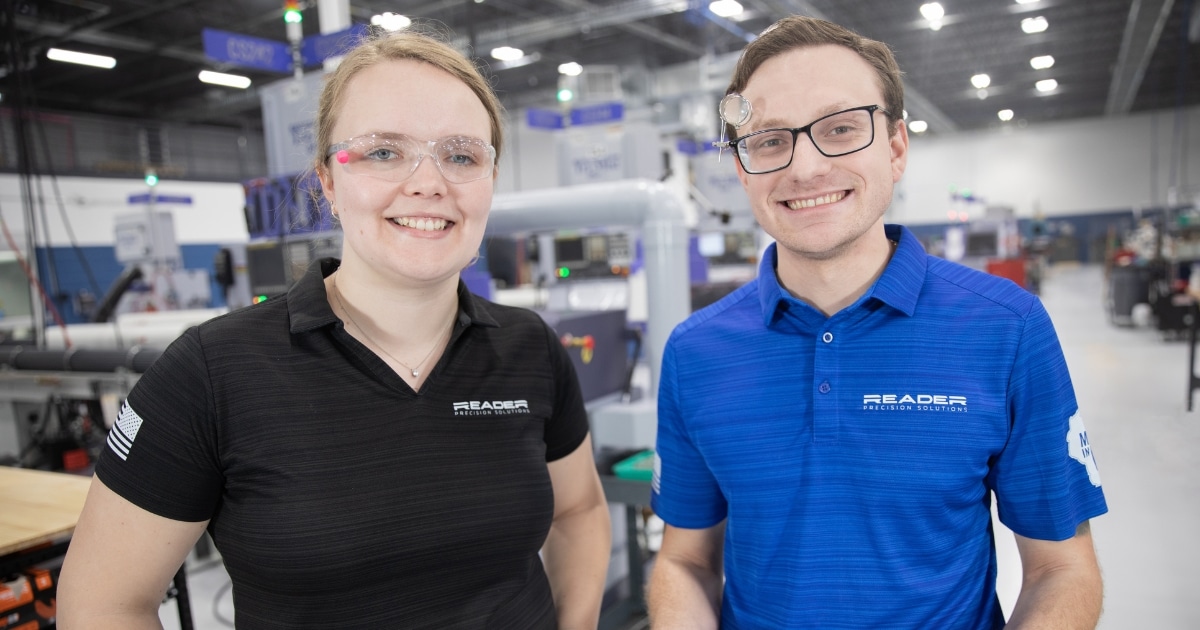
That’s a discipline companies like Reader Precision Solutions treat as the standard, not the goal. They get involved early on tolerances and manufacturability, so the best kind of defect, the one designed out before the first chip is cut, is the one you never pay for.
The good news is that this kind of cost is highly preventable, and prevention starts long before a part is ever made. The manufacturers who avoid it don’t get lucky. They build quality in rather than inspect for it, and they treat every part as something that carries their name long after it leaves the floor.
So what would a quality escape actually cost your operation, and how much of that have you ever put a number to?
See how Reader Precision builds quality in from the first conversation, or request a quote to start one.
Related Readings